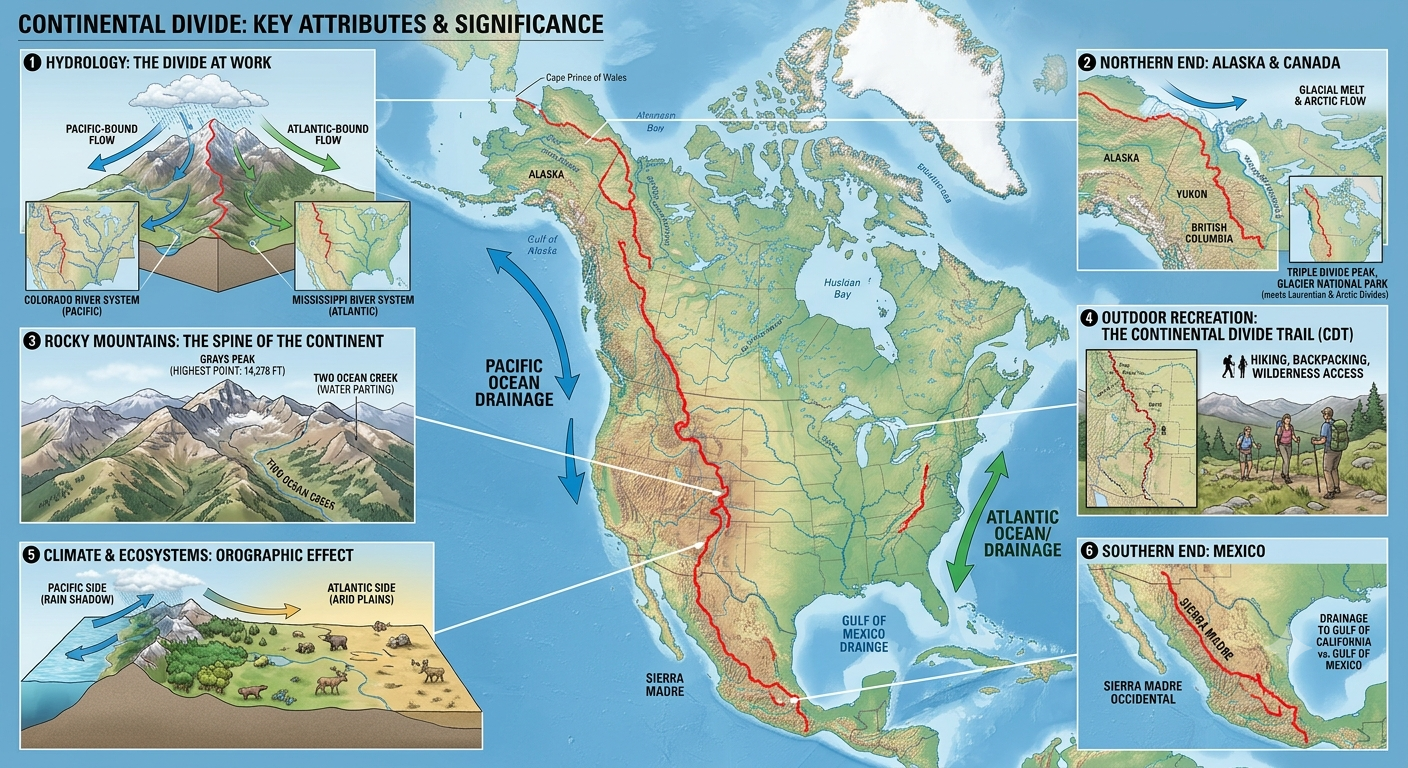
Often regarded as one of the most significant geographical features in North America, the continental divide plays a crucial role in the hydrology of the continent. This majestic ridge runs from the northernmost regions of Alaska, through Canada, and down to the southern reaches of Mexico, effectively demarcating the watersheds that drain into the Pacific Ocean from those that flow into the Atlantic Ocean or the Gulf of Mexico. Its unique topography contributes to differing climates and ecosystems on either side of the divide, making it a focal point for both geological study and outdoor recreation.
Spanning approximately 3,100 miles, the Continental Divide traverses several major national parks, including Glacier National Park in Montana and Rocky Mountain National Park in Colorado.
View [📽️🎬🗺️🗞️📊]
Buy [👕📒🎒🔋🎁]
These areas are celebrated not only for their breathtaking vistas and diverse wildlife but also for the extensive networks of trails that appeal to hikers and nature lovers alike. The allure of the Continental Divide lies in its rugged beauty, offering challenging hikes and opportunities to connect with nature away from urban environments. Each step along the trail reveals a landscape shaped by millennia of geological activity, inviting exploration and adventure.
Hikers are drawn to this remarkable region not just for the physical challenge, but also for the chance to experience the tranquility found in its pristine wilderness. The thrill of ascending rocky peaks and navigating through lush meadows can foster a deep respect for the natural world. As we delve into the stories that follow, these accounts will illustrate the profound impact that hiking along the Continental Divide can have, showcasing the resilience of the human spirit amid the grandeur of the great outdoors.
The Magic of Rocky Mountain National Park
Rocky Mountain National Park is a premier destination for hiking enthusiasts, offering a diverse array of trails set against the backdrop of stunning alpine scenery. From the soaring peaks to serene lakes, every trail in this national park tells a story; a story rich in natural beauty and adventure.
The park features iconic routes such as the Bear Lake Trail, renowned for its easy access and breathtaking views of the surrounding mountains and crystal-clear lake waters. As hikers stroll along this picturesque path, they encounter vibrant wildflowers in summer and picture-perfect snow-dusted landscapes in winter. Each season unveils a different charm of the park, captivating hikers with its changing vistas.
Another notable trail is the Longs Peak Trail, a challenging yet rewarding journey that attracts experienced hikers seeking adventure. This route culminates at the summit of Longs Peak, the park’s highest point, where hikers are treated to panoramic views of the expansive landscape below. The sense of accomplishment upon reaching the peak adds to the allure of this trail, leaving a lasting impression on those who dare to conquer it.
Notable stories from hikers often highlight moments of connection with nature, such as spotting a majestic elk or observing a family of mountain goats. These encounters create unforgettable memories and often change the way individuals perceive the wilderness. Hikers have shared tales of summiting challenging peaks, only to be rewarded by breathtaking sunrises that paint the sky in hues of orange and pink, creating a magical ambiance that resonates long after the hike has ended.
Rocky Mountain National Park continually invites adventurers to explore its trails, each step leading into a realm of awe and inspiration. The combination of challenging hikes, extraordinary scenery, and rich wildlife interactions makes this national park a timeless treasure for those who seek the magic of the mountains.
Adventure in Glacier National Park
Glacier National Park, often referred to as the “Crown of the Continent,” is a breathtaking expanse known for its stunning landscapes and diverse ecosystems. The park offers some of the most extraordinary hiking opportunities in the United States, with over 700 miles of trails that range from gentle strolls to grueling ascents. Hikers are drawn to its jagged peaks, shimmering lakes, and cascading waterfalls.
The scenery within Glacier National Park is unparalleled, with the famous Going-to-the-Sun Road providing access to many of the park’s most iconic features. Trails such as the Highline Trail and Grinnell Glacier trail present not only rewarding vistas but also demanding hikes that challenge even the most seasoned adventurers. The changing weather conditions, characterized by sudden storms and temperature drops, require hikers to be well-prepared and adaptable.
Many who trek through the park come equipped with essential gear that enhances both safety and enjoyment. Sturdy hiking boots, for instance, are crucial for navigating rocky terrain, while breathable clothing helps in managing the drastic temperature shifts typical of the region. Hikers often emphasize the importance of a well-packed backpack that includes sufficient water, snacks, and navigational tools. Popular stories from hikers include encounters with wildlife and the exhilaration of reaching summit views, where the expansive horizons leave unforgettable impressions.
Moreover, the camaraderie found amongst fellow hikers fosters a rich experience, as stories of personal challenges and triumphs are shared along the trails. Many report that Glacier’s rugged beauty and sense of wilderness rekindle a spirit of adventure that keeps them returning year after year. With every hike presenting new paths and stories waiting to unfold, Glacier National Park stands as a must-visit destination for those seeking both thrilling adventures and serene encounters with nature.
The Wonders of Yellowstone National Park
Yellowstone National Park, established in 1872, is renowned for its breathtaking landscapes and diverse ecosystems. Spanning approximately 3,500 square miles, it showcases an array of habitats, ranging from lush forests and expansive meadows to stark volcanic terrain. This unique combination of environments supports a wealth of wildlife, including grizzly bears, wolves, herds of elk, and diverse bird species, making it a hiker’s paradise.
The park’s geothermal features are perhaps its most striking attributes. Home to more than half of the world’s active geysers, including the iconic Old Faithful, Yellowstone’s geothermal landscapes offer a surreal experience for visitors. Hiking trails meander past bubbling hot springs, steaming fumaroles, and vibrant mineral pools, each providing a glimpse into the dynamic geological processes that shape the region.
While hiking in this incredible park, adventurers often encounter unexpected wildlife interactions. Hiking the trails, one might observe a moose grazing by a riverbank or catch sight of a curious bison blocking the path. These encounters serve as thrilling reminders of nature’s unpredictability. It is crucial for hikers to abide by safety guidelines to maintain a safe distance from wildlife. Carrying bear spray and knowing how to respond to encounters can enhance safety during these unique experiences.
Given Yellowstone’s varied environments, suitable hiking gear is essential. Sturdy hiking boots, moisture-wicking clothing, layered for temperature changes, and a reliable backpack are vital. Additionally, packing essentials like water filters, snacks, and navigation tools creates a safer and more enjoyable hiking experience. Whether traversing through dense forests or atop scenic overlooks, having the right equipment ensures hikers can fully appreciate the park’s rugged beauty.
Exploring Grand Teton National Park
Grand Teton National Park, located in the northwest corner of Wyoming, is renowned for its stunning mountain scenery and vast wilderness. With jagged peaks rising dramatically from the landscape, the park offers some of the most breathtaking views in the United States. Hikers flock to this natural playground not only for its beauty but also for the challenging trails that weave through its pristine environment.
One of the most iconic trails in the park is the hike to the summit of Grand Teton itself, which demands a high level of preparation, skill, and the right hiking gear. Hikers recount the thrill of standing atop this majestic mountain, where panoramic views stretch across the valley below and the glory of the Teton Range unfolds in all its splendor. The climb is often steep and requires navigational skills to tackle the rocky terrain, making the journey as rewarding as the destination.
Further down, the Cascade Canyon Trail offers a different experience with its lush flora and the soothing sounds of cascading waterfalls. This trail is popular among families and novice hikers, providing a more accessible glimpse into the park’s stunning vistas. Hikers are often amazed by the variety of wildlife they encounter along the way, including elk, deer, and even the occasional black bear, reminding visitors of the wild and untamed nature of this special place.
Regardless of the chosen trail, proper preparation is essential. Hikers must plan for changes in weather, ensure they have adequate hydration, and equip themselves with the necessary gear for safety and comfort. Stories from those who have hiked here stress the importance of being well-equipped with sturdy boots, layered clothing, and navigation devices. These preparations enhance the hiking experience, allowing adventurers to fully immerse themselves in the breathtaking surroundings.
Trail Tales from Canada: Yoho and Banff National Parks
Canada’s national parks, particularly Yoho and Banff, offer some of the most breathtaking landscapes and thrilling hiking experiences in North America. These parks are renowned for their towering mountain peaks, shimmering lakes, and diverse wildlife, attracting hikers from around the globe. Each year, adventurers converge on these impressive sites, eager to explore the abundant trails and the stunning nature that surrounds them.
One notable story is that of an international group of hikers who visited Yoho National Park. On their trek along the Emerald Lake Loop, they encountered diverse terrains, transitioning from gentle trails to rocky terrains requiring more technical hiking skills. The group was well-prepared, equipped with the right gear tailored to the park’s variable weather conditions, which can shift from sunny to rainy within moments. This preparation proved crucial as they traversed through sections of the trail filled with streams and muddy patches, highlighting the need for durable footwear and breathable clothing.
In Banff National Park, hikers experience a different set of challenges and rewards. A hiker from Europe recounted her time on the famous Plain of Six Glaciers trail, where the contrast between glacier views and vibrant wildflower fields was captivating. The sheer scale of the mountains forces trekkers to adapt their hiking styles, and she emphasized the importance of portable trekking poles to navigate steep ascents and descents safely. This adaptability is vital, as trail conditions can significantly differ based on the time of year.
Preparation is key to enjoying the Canadian wilderness, regardless of which park one chooses to explore. Understanding the unique geography of both Yoho and Banff is essential for selecting appropriate gear and planning routes that align with one’s skill level. Whether mastering steep climbs or enjoying leisurely lakeside strolls, there is much to learn from fellow hikers’ experiences, making these adventures not just an exploration of nature, but a sharing of knowledge and camaraderie.
Hiking the Lesser-Known Trails
The Continental Divide features a multitude of trails that, while not as widely recognized as some of the more famous paths, offer stunning landscapes and the chance for solitude. One such trail is the Lost Lake Trail in Colorado. This serene path winds through lush forests and eventually leads to the breathtaking Lost Lake, a perfect spot for reflection and photography, often overlooked by the hordes heading for the more popular locations. Hikers here have reported sightings of local wildlife, from deer to various bird species, making for a rich and rewarding experience.
Another remarkable but less traveled route is the Porcupine Rim Trail in Utah. This trail offers not only breathtaking panoramic views of the surrounding canyons but also a fascinating variety of flora and fauna. Dotted with wildflowers in the spring, Porcupine Rim serves as a serene escape from the busy trails nearby. Hikers have shared stories of having the trail largely to themselves, allowing for a more introspective journey amidst nature.
Proper gear can significantly enhance any hiking adventure, especially when exploring these hidden gems. Investing in lightweight, breathable clothing is essential to navigate diverse terrains comfortably. Good hiking boots are also crucial; they provide support and grip for those tricky, uneven sections of trail. Additionally, a hydration pack is recommended for maintaining energy levels during longer hikes, particularly in remote areas where water sources are scarce.
The lesser-known trails along the Continental Divide are not just paths; they are opportunities for deep personal connection with nature and self. Those willing to venture off the beaten path can experience the beauty and solitude that these trails offer, making their hiking adventures truly epic.
Essential Gear for Hiking the Continental Divide
When embarking on an epic hiking adventure, particularly along the Continental Divide, the right gear is essential to ensure both safety and enjoyment. This section will provide a comprehensive guide on gear selection, drawing from personal stories and experiences recounted in earlier sections.
First and foremost, clothing is critical for adapting to the diverse weather conditions encountered along the trails. A layered approach is recommended, allowing hikers to adjust their outfits according to changing temperatures. The base layer should be moisture-wicking, such as merino wool or synthetic materials, to keep sweat off the skin. The mid-layer, like fleece or down, provides insulation, while an outer shell should be waterproof and breathable. Personal experiences indicate that having adequate insulation and flexibility can make a significant difference during unexpected weather shifts on the Continental Divide.
Footwear is another essential consideration; selecting the right shoes or boots can greatly influence the hiking experience. Sturdy, lightweight hiking boots with good ankle support and traction are recommended, particularly for uneven terrain prevalent in the area. Waterproof options are advantageous for stream crossings and rainy conditions. Based on shared adventures, it is suggested to break in hiking boots before challenging hikes to avoid discomfort.
A reliable backpack is equally important, ensuring that personal items and emergency gear are easily accessible. The size of the backpack should be proportionate to the length of the trip, with a capacity of 50 to 70 liters recommended for multiday excursions. It should also feature adjustable straps and ventilation to enhance comfort during long treks. Previously shared experiences highlight the necessity of keeping heavy items close to the back for better weight distribution.
Finally, safety equipment should not be overlooked. Essential items include a first-aid kit, navigation tools like a compass or GPS, and a whistle for emergencies. Personal stories emphasize that preparedness can greatly enhance security on remote trails. By investing in the right gear, hikers can focus on enjoying the breathtaking views and adventures that the Continental Divide has to offer.
Conclusion and Call to Adventure
In summarizing the vibrant stories shared throughout this blog post, it becomes clear that hiking along the Continental Divide offers not only breathtaking views but also unforgettable experiences that resonate profoundly with adventurers. The journeys encountered highlight the diverse landscapes and unique wildlife that make this region a hiking paradise. These tales serve as a reminder of the power of nature to inspire and evoke a sense of adventure in all who venture through its paths.
As we reflect on these adventures, it is essential to emphasize the joy found in exploring the great outdoors. Each hike presents an opportunity to connect with the environment, challenge oneself physically, and obtain mental clarity. For many, hiking isn’t just a pastime; it’s a pathway to understanding one’s personal limits and embracing the thrill of exploration.
However, to fully enjoy the hiking experience, preparation is key. Having the right gear is crucial for both safety and comfort. From sturdy hiking boots to well-fitted backpacks, the right equipment can make a significant difference in the overall experience. Additionally, knowledge of the trails, weather conditions, and basic survival skills can transform a regular hike into an extraordinary adventure.
Therefore, we encourage you to embark on your own hiking journey. Whether you choose to explore the rugged terrain of the Continental Divide or discover local trails, remember that the adventure awaits just a step away. Embrace the challenge, prepare adequately, and let the wonders of nature rejuvenate your spirit. Your next great hiking adventure is waiting to unfold!