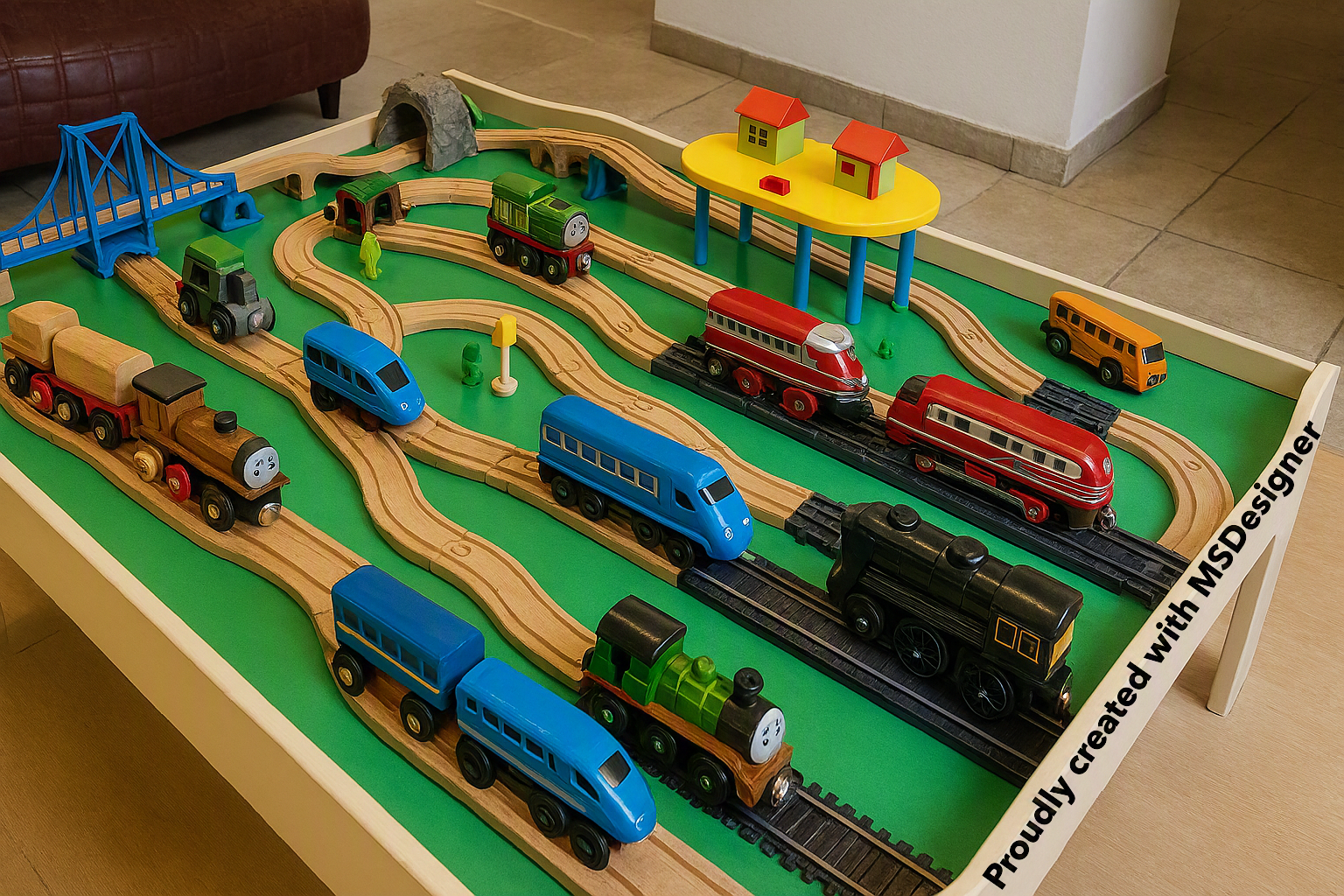
As early as the 19th century, toy trains were primarily constructed from wood and manually operated. Over the decades, these miniature locomotives have evolved significantly, both in design and functionality. From simple wooden blocks to intricate, electronically controlled models, toy trains have transformed into a beloved hobby for many enthusiasts around the globe.
🔗 As an Amazon Associate, here are links to products that may be a good fit. Also, links are ethically made through Amazon where I earn from qualifying purchases.
| Product Category | Description |
| Battery Toy Train Sets | Remote-controlled or app-enabled electric train sets featuring realistic sounds, lights, and intricate track loops for kids and hobbyists. |
| Magnetic Train Sets | Durable, classic wooden railway toys with magnetic connectors, designed to help young children develop fine motor skills and creativity. |
| Model Train Scale Kits | Detailed model railroading kits and locomotives for older enthusiasts and collectors focusing on assembly, painting, and realism. |
| Toy Train Track Expansion Packs | Extra curved tracks, straight pieces, bridges, and switch tracks to expand layouts and add complexity to train setups. |
| Model Railway Scenery & Buildings | Miniature buildings, trees, figures, and LED streetlights to create vibrant, realistic urban or rural landscapes for train layouts. |
| Train Track Storage & Organizers | Dedicated storage solutions, bins, and racks to keep tracks, cars, and accessories neatly organized and protected. |
| Model Train Maintenance & Cleaning Kits | Specialty cleaning brushes, track erasers, and lubricants designed to keep locomotives running smoothly and tracks debris-free. |
| Classic Holiday Train Sets | Festive under-the-tree train sets, including popular holiday-themed electric trains that bring classic cheer to family traditions. |
The appeal of toy trains lies not only in their intricate craftsmanship but also in the opportunities they provide for learning and creativity. For children, playing with toy trains can enhance motor skills, spatial awareness, and imaginative play. Young children often engage in storytelling and role-play scenarios that help develop their cognitive skills. As they lay down tracks and create landscapes, they learn principles of engineering, physics, and geography in a playful, hands-on environment.
For adults, the allure of collecting and building elaborate train sets goes beyond nostalgia. Many view it as a form of art and personal expression, meticulously creating landscapes that capture the essence of different cultures and time periods. Model train communities flourish, with dedicated events, exhibitions, and online forums where enthusiasts can share their expertise, techniques, and innovations. This vibrant community fosters a sense of belonging and engagement, further solidifying the position of toy trains within popular culture.
As we delve deeper into this fascinating world, we will explore not only the historical significance of toy trains but also their enduring popularity across generations. The journey through the world of toy trains showcases not just a toy, but a means of enriching lives through play, creativity, and learning.
The Different Types:
Toy trains come in various forms, each catering to different interests and age groups. One of the most popular categories is electric trains. These trains typically run on tracks powered by electricity, allowing for intricate layouts and designs. Electric trains often feature realistic sounds and lights, adding an immersive experience for both young and adult enthusiasts. They can be operated via remote controls or apps, making them particularly engaging for tech-savvy children and hobbyists alike.
Another significant type is wooden trains, which are known for their durability and simplicity. These toys are often designed with younger children in mind, focusing on developing motor skills and imaginative play. Wooden trains are generally equipped with magnets that connect the cars, allowing children to construct their own train formations. The tactile nature of wooden trains makes them an excellent choice for developing creativity and fine motor skills.
Model trains represent another category, appealing to serious collectors and hobbyists who enjoy creating scale models of real trains and railroads. These trains can be quite complex, made from a range of materials including metal, plastic, and wood. Model train enthusiasts take pleasure in the meticulous assembly, detailing, and painting of their models, and often display them in elaborate setups that mimic real-world railway systems. This complexity makes them suitable for older children and adults who have a keen interest in design and engineering.
In conclusion, understanding the different types of toy trains available can significantly enhance the experience for both buyers and users. From electric and wooden trains to model trains, each type offers unique benefits that cater to various preferences and developmental needs.
The Benefits of Playing with Toy Trains
Toy trains offer a myriad of benefits for children, facilitating both educational and developmental growth. One of the primary advantages is the enhancement of fine motor skills. As children manipulate the tracks, connect various sections, and operate the trains, they engage their hand-eye coordination and dexterity. This type of play is not only enjoyable but crucial for their physical development, as it lays the groundwork for skills they will use throughout their lives.
Another significant benefit of toy train play is cognitive development. As children design tracks and construct layouts, they engage in problem-solving, critical thinking, and spatial awareness. For instance, determining how to navigate a toy train around obstacles encourages logical reasoning. Additionally, many toy train sets include numerical elements, promoting early math concepts like counting and sequencing when children track the number of cars or the distance traveled.
Imaginative play is also fostered through toy trains. Children create intricate stories and scenarios as they play, which enhances their creativity and storytelling skills. This form of play encourages them to think outside the box and express their thoughts and emotions in a constructive manner. Furthermore, as kids play with toy trains together, they often engage in cooperative play, which promotes teamwork and social interaction. They learn to share, take turns, and communicate, which are essential interpersonal skills.
In conclusion, the experience of playing with toy trains is multifaceted, supporting fine motor skills, cognitive growth, and imaginative play while fostering social connections among peers. These benefits highlight the importance of investing in quality toy trains, as they are more than just entertainment; they are valuable educational tools that can support childhood development in various aspects.
Setting Up the Perfect Train Set
Creating an enjoyable and engaging train set is an influential aspect of the model train hobby that combines elements of creativity, organization, and enjoyment for all ages. A well-thought-out layout enhances the fun of toy trains while fostering an immersive experience. Start by identifying an appropriate space to set up your train layout, ensuring it accommodates not only the train tracks but also ample room for creative accessories and scenery.
The layout design is crucial. Consider the available space and the type of train set you own, such as the classic or modern styles. Using graph paper or train simulation software can allow for more detailed planning of your train track arrangement. A good practice is to incorporate various elements like loops, hills, and bridges, which can add complexity and visual appeal. Ensure to leave enough space for the train to navigate smoothly, thereby maximizing enjoyment.
Choosing the right accessories can also enhance your train setup. Look for miniature buildings, figurines, trees, and cars that complement the aesthetic of your railway environment. The use of LEDs for signaling and themed decorations can create a more vibrant atmosphere, making it appealing visually and tonally. Incorporating elements themed around nature or urban settings often elevates the overall experience of the train system.
Track organization is another essential factor to consider when setting up your train set. By utilizing track organizers or storage solutions, you can maintain the condition and integrity of the tracks while ensuring they remain accessible when needed. Restructuring your setup periodically with new layouts can also bring fresh excitement, inviting repeat play and creative exploration.
The Role of Toy Trains in Family Bonding
Toy trains have long been cherished by families, serving not only as a source of entertainment but also as a catalyst for building meaningful relationships. Engaging in activities centered around toy trains fosters interaction between family members, often bringing together different generations. When parents and children unite to build intricate tracks and landscapes, they create an environment rich in opportunity for communication, collaboration, and shared creativity.
This hands-on approach to play allows family members to bond over shared goals, whether constructing an elaborate track or fine-tuning the operational details of a miniature train system. Each session of play provides an opportunity to share stories, discuss ideas, and nurture connections that may otherwise remain untouched in the hustle of daily life.
Moreover, the act of collecting toy trains can deepen these familial ties. Families can traverse the journey of gathering diverse models together, learning about their history, and sharing their individual perspectives on the importance of each piece. This shared hobby cultivates a sense of belonging and continuity, as various generations teach one another about the significance of their collections, whether historical or sentimental.
Participating in toy train exhibitions or community events further promotes bonding as families come together to showcase their creations, learn from others, and even participate in contests. Such experiences create lasting memories that are etched into family history, reinforcing traditions and encouraging future generations to appreciate the joys found in this engaging pastime.
In essence, toy trains serve as a bridge that connects families through play, creativity, and collaboration, ultimately enriching their relationships while fostering invaluable life skills such as patience, teamwork, and problem-solving. Their role transcends mere playthings, becoming tools for connection and growth within the family unit.
Collecting Toy Trains: A Hobby for All Ages
Toy train collecting has gained immense popularity over the years, transcending generational boundaries and appealing to enthusiasts of all ages. Many collectors are drawn to this engaging hobby due to various factors like rarity, historical significance, brand loyalty, and condition. Each of these elements plays a crucial role in determining the value and desirability of toy trains.
Rarity is one of the primary considerations for collectors. Limited edition models or discontinued sets often command premium prices, enhancing their allure among collectors. As a result, many toy train enthusiasts invest time and effort in researching manufacturers and production runs to identify rare finds. Age and manufacturing period also contribute significantly; older models, especially those from renowned brands, can fetch high prices on the collector’s market.
Brand reputation is another crucial factor. Established names such as Lionel, Hornby, and Märklin are highly sought-after due to their quality craftsmanship and nostalgic appeal. Collectors often focus on specific brands, creating themed collections that celebrate their preferred manufacturers. This focus helps deepen their engagement and understanding of the hobby.
The condition of toy trains is equally important. Items that are well-preserved, maintaining their original paint and functionality, tend to be more valuable. Collectors frequently seek out pieces with their original packaging, as this can significantly enhance the item’s worth. Some enthusiasts even embark on restoration projects to enhance the aesthetic appeal and functionality of their collection, which adds another layer of enjoyment.
As captured by various collectors, the most rewarding aspect of this hobby lies in the connections formed with fellow enthusiasts. Toy train shows and conventions allow collectors to meet, share stories and swap strategies, fostering a vibrant community. Collecting toy trains is not merely about the toys; it encompasses history, craftsmanship, and camaraderie, making it a fulfilling pursuit for individuals of all ages.
Toy Trains in Popular Culture
Toy trains have played a significant role in shaping various aspects of popular culture, transcending generations and capturing the imagination of children and adults alike. From films and television shows to literature, these miniature locomotives have been celebrated and featured prominently, often symbolizing adventure, nostalgia, and a sense of wonder.
One of the most notable representations of toy trains can be found in films, such as the beloved classic The Polar Express. This animated movie not only highlights the charm of toy trains but also emphasizes themes of belief and the magic of childhood. The enchanting journey to the North Pole, powered by a magnificent train, resonates deeply with audiences, showcasing how a toy train can represent the spirit of Christmas and the innocence of youth.
Television series have also embraced the allure of toy trains, with programs like Thomas & Friends introducing children to the world of locomotives through engaging stories and vibrant characters. Each episode imparts valuable life lessons while nurturing a fascination for trains, serving as a charming educational tool that promotes teamwork and friendship among young viewers.
In literature, toy trains frequently make appearances in children’s books, with stories often centering around adventure and exploration. Titles such as Goodnight, Gorilla and The Little Engine That Could exemplify how toy trains foster creativity and imagination. These stories not only entertain but also educate, teaching essential values such as perseverance and kindness.
Overall, the presence of toy trains in popular culture reflects their enduring appeal. They encapsulate a unique blend of joy and learning, continuously inspiring new generations through various media. Toy trains remain a cultural touchstone, bridging the gap between play and education, making them an integral part of our collective experiences.
Maintenance and Care for Toy Trains
Maintaining toy trains is essential to prolong their lifespan and ensure they operate smoothly. Regular care not only enhances performance but also preserves the aesthetic appeal of these cherished model locomotives. A well-maintained toy train can provide many years of enjoyment, making proper upkeep paramount.
When it comes to cleaning, the first step is to disconnect any electrical components to avoid damage. Use a soft, lint-free cloth to wipe down the exteriors of the toy trains, effectively removing dust and dirt. For more stubborn grime, a mild soap solution can be used, taking care to avoid harsh chemicals that may damage paint and materials. Additionally, the wheels and tracks accumulate dirt over time, which can impede performance. A toothbrush or a small, soft brush works well for cleaning these components, ensuring they are free from debris.
Storage is another critical aspect of toy train maintenance. For preserving their condition, it is advisable to store toy trains in a dry, cool environment. If possible, place them in a dedicated display case to protect them from dust and accidental damage. Using foam padding or individually wrapping each piece in acid-free tissue can also prevent scratches and scuffs during storage. Avoid stacking trains on top of each other, as this can lead to misalignments or damage over time.
Common issues with toy trains include derailing and electrical failures. Regularly check alignments and wheel conditions to prevent derailments caused by uneven surfaces or obstructions. For electric trains, inspect wiring and connectors frequently for signs of wear or corrosion. Addressing these minor issues promptly can save time and money on major repairs down the line. By following these maintenance tips, enthusiasts can keep their toy trains in excellent condition, ensuring ongoing fun and learning opportunities for years to come.
Conclusion and Future of Toy Trains
Toy trains have long been cherished for their ability to spark creativity and foster learning among children and adults alike. Throughout this blog post, we have explored the rich history, the various types of toy trains available, and the numerous benefits they provide, including enhancing fine motor skills, promoting imaginative play, and serving as a wonderful vehicle for family bonding. As we look to the future, it is clear that the world of toy trains continues to evolve in exciting ways.
The toy market is increasingly influenced by technology and changing play patterns. Today, we see a growing trend towards digital integrations, such as Bluetooth-enabled trains and interactive tracks that can connect with mobile applications. These innovations bring a modern twist to traditional toy trains, making them more appealing to tech-savvy children. However, despite these advances, the fundamental allure of toy trains remains rooted in hands-on play, which has stood the test of time.
Collectors also have reason to be optimistic about the future of toy trains. With a surge in interest from both young enthusiasts and seasoned collectors, there will likely be more limited-edition releases and collaborations with renowned brands. This fosters a vibrant market where nostalgia meets innovation, ensuring that toy trains retain their place in the hearts of many.
In summary, while the toy train landscape is changing, the core pleasures associated with these miniature locomotives—be it playing, collecting, or sharing memories with family—will endure. Embracing these joys means recognizing the potential for growth and learning, making toy trains not just toys, but lasting legacies cherished by generations to come.